Abstract
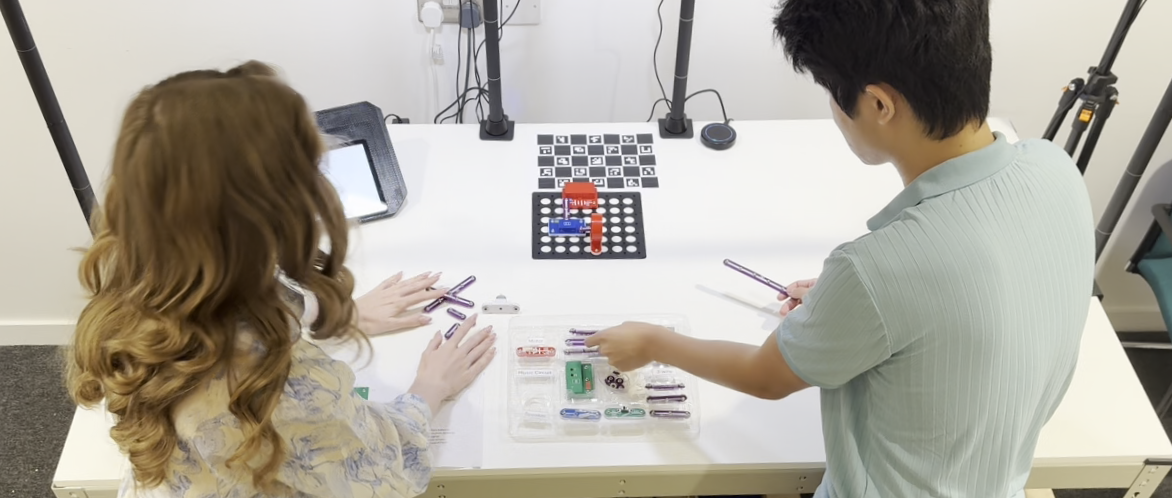
When learners work together to produce a shared solution, the resulting outcome does not necessarily show what each learner understands as different learners may contribute differently to the same solution. We introduce Attribution-based Bayesian Knowledge Tracing (A-BKT), which maintains separate estimates of individual skill knowledge from shared collaborative observations. A-BKT adjusts the influence of each observation according to the learner’s estimated contribution to the evolving solution. We use process information from intermediate task states to estimate these contributions and examine whether separating evidence collected during the task from evidence collected at task completion improves individual knowledge estimates. We evaluate A-BKT using data from 13 adult dyads completing collaborative Snap Circuits tasks. Individual mastery estimates were assessed against post-test performance and video annotations of learner-specific evidence during the activity. The resulting estimates showed limited ability to distinguish higher from lower post-test performance. However, learner-specific attribution improved the model’s ability to distinguish between partners, while the proposed evidence-handling approach improved correspondence with the video annotations. Overall, the findings show that shared collaborative observations can support individual knowledge traces when combined with information about learner contribution.