Abstract
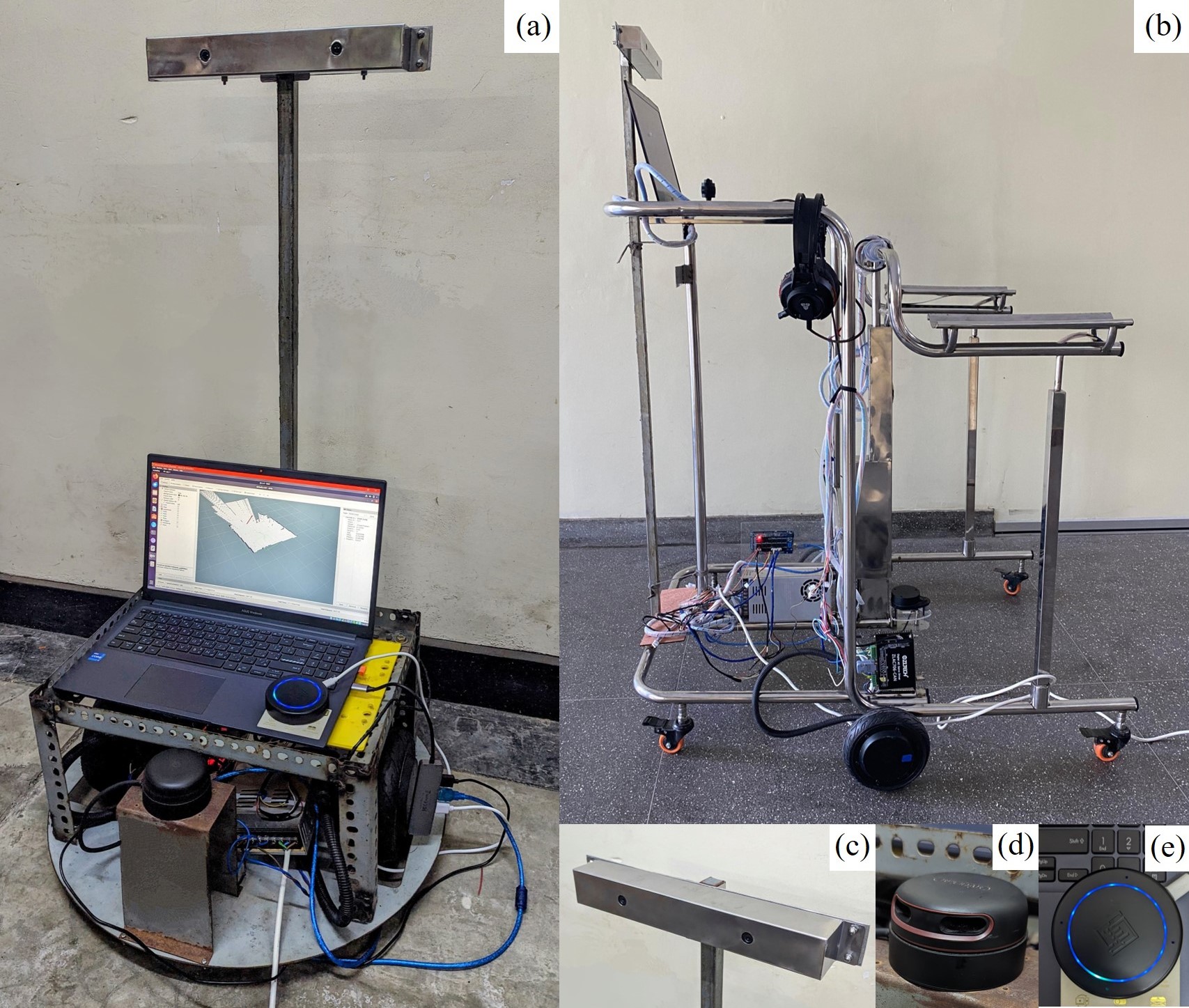
A novel approach for autonomous summoning of Patient Assistive Mobile Robots (PAMRs) to improve their use in areas with limited infrastructure and healthcare access has been presented. The method has been designed to operate effectively in unstructured environments, eliminating the need for Wi-Fi or other network-dependent Indoor Positioning Systems (IPS). The proposed summoning approach integrates LiDAR-based Simultaneous Localization and Mapping (SLAM), Sound Source Localization, and Stereo Vision technologies. For scenarios where the patient is not within the robot’s line of sight, Sound Source Localization guides the robot toward auditory cues. The system utilizes stereo-vision-based gesture recognition and depth estimation for line-of-sight scenarios, allowing patients to summon the robot using natural gestures. LiDAR-based SLAM has been utilized for mapping, localization, path planning, and obstacle avoidance. This multimodal approach ensures the robustness of the summoning capabilities, making it adaptable to diverse environments. Preliminary testing has demonstrated the method’s effectiveness, suggesting potential incorporation in PAMRs for healthcare delivery.